
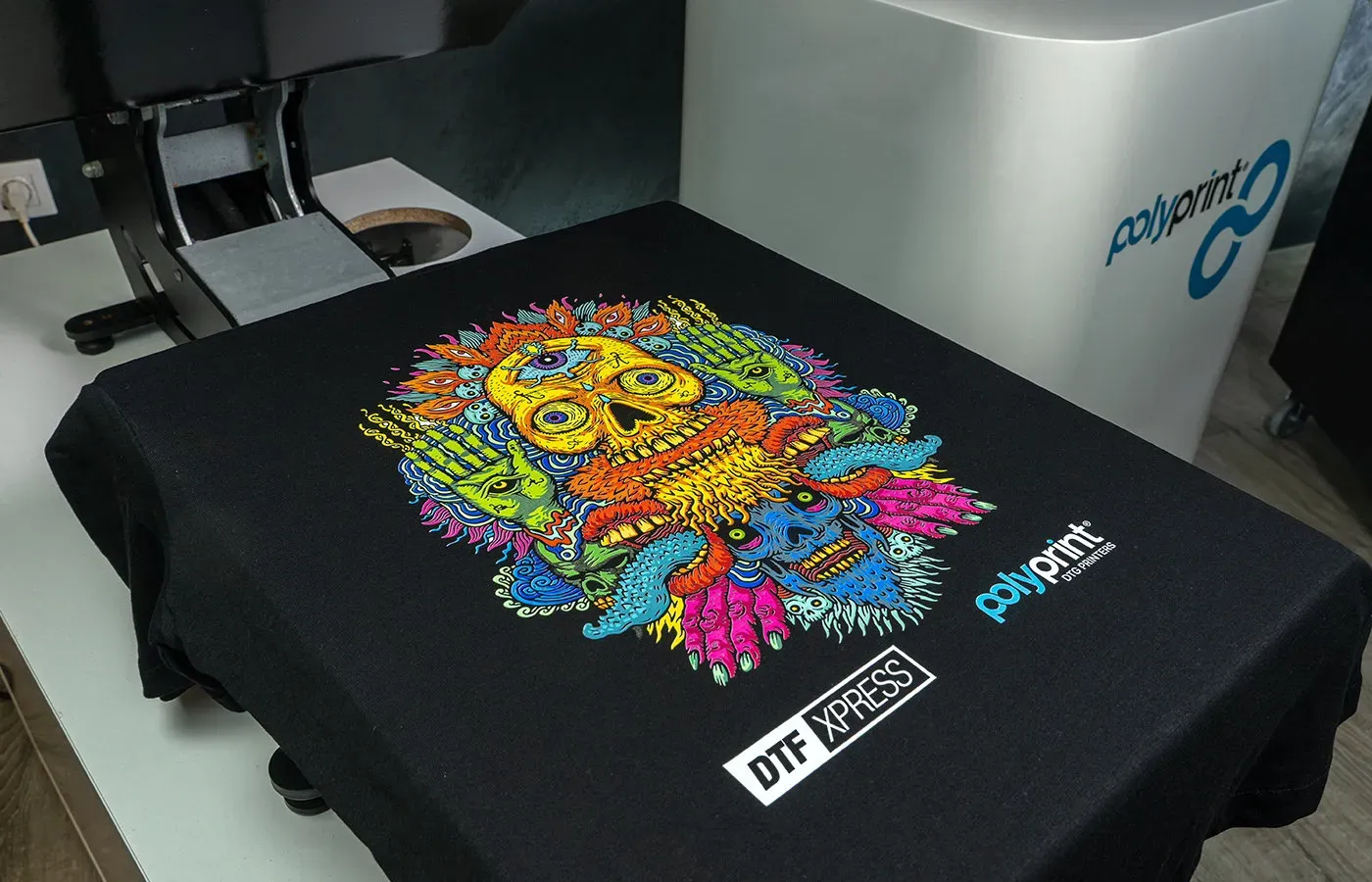
DTF printing for fashion has emerged as a versatile, cost-effective way to translate bold ideas into wearable art. As designers seek faster turnaround times, lower minimums, crisper color reproduction, and easier production planning, direct-to-fabric printing offers a compelling blend of flexibility, scalability, and repeatable results that make it a practical choice for fashion labels. Whether you’re developing a seasonal collection or experimenting with bold graphic tees, the technology can deliver vibrant fabric prints that resist fading, provide durable garment prints that withstand repeated washing, and support multi-color imagery with smooth gradients. This method fuses digital precision with the tactile appeal of textiles, enabling intricate designs, fine details, and a wide color gamut that keeps garments looking fresh from runways to retail racks. To round out the picture, this guide also explains how to optimize workflows for DTF curing and heat settings, ensuring consistent results and helping designers rely on the technology for fashion.
Beyond the exact label DTF, professionals often refer to digital fabric transfer, fabric-on-transfer printing, or textile transfer technology when speaking about the same process. These terms reflect the core idea—printing graphics on a transfer medium, then bonding them to textile with heat and pressure, all while aiming for color fidelity and wash-fastness on a broad range of fabrics. Viewing the workflow through the lens of textile decoration, heat-applied graphics, or ink-on-textile processes can help teams align with suppliers, optimize specifications, and surface related terms that shoppers and buyers search for.
DTF Printing for Fashion: Transforming Direct-to-Fabric Printing for Style-Driven Collections
DTF printing for fashion revolutionizes how designers translate bold ideas into wearable art. By using a transfer film and a heat press, this approach delivers crisp color, wide color gamuts, and a soft hand that many methods struggle to match. In practice, DTF leverages direct-to-fabric printing workflows to place complex graphics on a variety of fabrics with consistent results.
For fashion studios, the benefits go beyond image quality. The process supports faster turnaround, lower minimums, and greater creative flexibility—allowing rapid prototyping of textures, gradients, and multi-color designs without the setup costs of traditional screen printing. The result is durable garment prints that hold up under everyday wear and washing while preserving the original design intent.
Maximizing Vibrant Fabric Prints with Direct-to-Fabric Printing Workflows
Direct-to-fabric printing enables vibrant fabric prints by preserving color accuracy and enabling smooth gradients across large areas. When paired with proper color management, designers can reproduce photographic-style graphics and subtle tonal shifts with minimal color bleed.
Fine-tuning workflows for batch runs reduces misprints and accelerates production. Test prints, underbase planning for dark fabrics, and streamlined file preparation help maintain consistency across garments while supporting trend-driven colorways.
Materials, Films, and Process Essentials for Durable Garment Prints
The core of a reliable DTF setup is a compatible transfer film, precise adhesive powder, and reliable curing equipment. These components work together to deliver durable garment prints that endure washing and wear across fabrics such as cotton, blends, and select synthetics.
Process choices—film types, powder adhesion, and heat press settings—affect adhesion quality and image fidelity. By selecting the right combination for each fabric, designers can maintain crisp edges and color stability without cracking or peeling.
Color Management and DTF Curing: Fine-Tuning DTF Curing and Heat Settings
Color management is essential for consistent results across runs. Regular calibration, color swatches on representative fabrics, and test prints help ensure that vibrant palettes stay true from first sample to bulk production.
DTF curing and heat settings determine how well the powder bonds and how the image adheres through washing. Optimizing dwell time, temperature, and pressure reduces issues like chalky whites, edge cracking, or delamination, delivering reliable wear resistance.
From Concept to Garment: A Scalable DTF Workflow for Fashion Lines
A successful DTF workflow starts with design finalization and print-ready files that account for bleed, placement, and fabric variations. Direct-to-fabric printing enables rapid iteration of colorways and placements, helping designers move from concept to garment faster.
As brands grow, scalable DTF processes matter. Batch printing, standardized color management, and sustainable material choices help maintain margins while delivering vibrant fabric prints and durable garment prints across collections.
Frequently Asked Questions
DTF printing for fashion: what makes it ideal for vibrant fabric prints and durable garment prints?
DTF printing for fashion uses a transfer film, adhesive powder, curing, and a heat press to deliver a crisp, color-rich image with a soft hand. It supports multi-color graphics and strong wash-fastness across fabrics, enabling faster turnaround and lower minimums while maintaining durable garment prints.
How does direct-to-fabric printing compare for fashion designs in terms of color reproduction and workflow?
Direct-to-fabric printing offers scalable production from capsules to larger runs while reproducing vibrant colors and fine details with less color bleed than some alternatives. It simplifies multi-garment workflows and lowers setup costs, with curing and heat settings ensuring durable adhesion.
Which fabrics work best with DTF printing for fashion, and what adjustments are needed for cotton blends and synthetics?
DTF printing for fashion works well on cotton, cotton blends, and many synthetics. Cotton often delivers strong adhesion and vivid color, while polyester may require adjusted curing times or an adjusted underbase strategy. Always test on the fabric to optimize vibrancy and ensure durable garment prints.
How should I manage color and curing settings to ensure vibrant fabric prints and durable garment prints?
Establish standardized color management with calibrated printers and test runs on representative fabrics. Use appropriate color profiles, verify the underbase on dark fabrics, and optimize the DTF curing and heat settings to achieve solid wash-fastness and durable adhesion across batches.
What are the essential steps in the DTF printing for fashion workflow from concept to garment?
Key stages include design finalization with colorways, printing onto transfer film, applying adhesive powder and curing, transferring the design with heat and pressure, and post-transfer finishing (peel, touch ups, and sealing if needed). This workflow supports rapid fan out while delivering vibrant fabric prints and durable garment prints.
| Aspect | Key Points |
|---|---|
| Understanding DTF printing for fashion | Uses transfer film with adhesive powder and a curing step; works on cotton blends and polyester; produces crisp images, color accuracy, and a soft hand; supports multi‑color graphics, photos, and bold typography; good wash-fastness; choose method balancing cost, speed, and quality. |
| Why choose direct-to-fabric printing for fashion designs | Scales from capsule runs to seasonal orders; vibrant colors with less color bleed; fine detail and photographic imagery; simplified workflow for multi‑garment runs; rapid adaptation to trends; faster development cycles and test colorways with minimal risk. |
| Materials, films, and workflow essentials | Printed transfer film, adhesive powder, curing equipment, and a heat press; film coated with adhesive; powder enables bonding; curing activates; transfer to fabric; considerations include compatible films, powders, fabric compatibility, and heat press settings. |
| Design prep and color management for fashion projects | Work at 300–600 DPI; use sRGB or Adobe RGB baseline and convert to printer‑friendly profiles; white underbase for dark fabrics; separation and soft masking to prevent halos; vector logos; crisp raster at final print size. |
| The step-by-step process: from concept to garment | Design finalization; printing onto transfer film; powder adhesion and curing; transfer to garment; post‑transfer finishing; hot or cold peel as recommended; test prints and batch readiness. |
| Color management, consistency, and fabric care | Calibrate printers; run color tests on representative fabrics; wash-fastness depends on proper curing and bonding; provide care labels to preserve color and adhesion; document color standards to reduce variation. |
| Fabrics, textures, and practical tips for fashion use | Cotton and blends are generally reliable; polyester and poly‑blends may need curing/time adjustments; knits can stretch—plan placement and anchoring; smoother fabrics yield crisper prints; pre‑wash fabrics to remove finishes that hinder adhesion. |
| Troubleshooting common challenges in DTF fashion printing | Color shifts; white underbase issues; cracking at edges; poor adhesion; bleed on dark fabrics; solutions include adjusting color profiles, test prints, refining underbase and curing, ensuring full film cure, and testing on fabric. |
| Cost, scalability, and sustainability considerations | Relatively low upfront costs versus large‑scale screen printing; monitor material costs and negotiate bulk pricing; optimize production speed with batch processing; evaluate sustainability of films and adhesives, energy use, and waste management; buffer stock to reduce misprints. |
Summary
This table summarizes the key points about DTF printing for fashion, focusing on workflow, materials, design preparation, color management, fabrics, troubleshooting, and scalability. It highlights how DTF can deliver vibrant, durable garment prints across various fabrics while enabling flexible production strategies.