
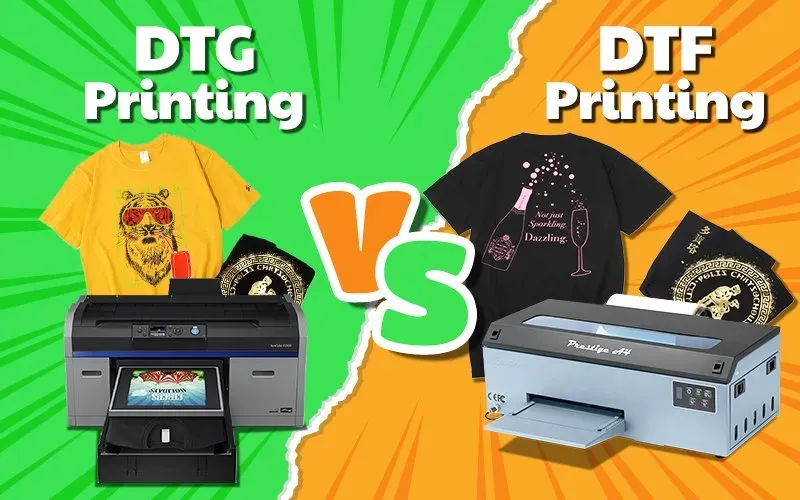
DTF vs DTG printing has become a pivotal topic for apparel brands, print shops, and merch makers evaluating which method fits their lines and timelines, especially when ROI, turnaround times, and long-term maintenance are on the line. A clear DTF vs DTG comparison reveals how each approach handles color richness, fabric compatibility, and the economics of small runs versus large production, along with maintenance costs and ease of integration into existing workflows. As you compare the methods, you’ll notice DTF’s film-based transfers offer versatility across fabrics while DTG emphasizes sharp detail on white or light garments, with practical implications for color management and inventory planning. When it comes to print quality and durability, DTG often delivers a soft hand on cotton whereas DTF provides robust results across blends and darker fabrics, supporting a broader range of garment types and design complexities. Understanding the cost implications and workflows helps brands decide whether to lean toward DTG for high-detail cotton work or DTF for flexibility and mixed fabrics.
From an alternative terminology perspective, the discussion shifts to film-based transfers versus direct-to-fabric ink-on-textile methods. These digital garment decoration approaches share goals—vibrant color, durable adhesion, and scalable production—yet differ in substrates, workflow, and final hand. Think in terms of transfers versus direct-to-textile printing to evaluate color depth, washfastness, and how the artwork feels on cotton, blends, or synthetics. LSI principles highlight related concepts like pigment inks, heat-transfer films, pretreatment considerations, and curing methods that influence a brand’s decision between these two paths.
DTF vs DTG printing: understanding the core difference for apparel brands
DTF vs DTG printing represent two mature paths in apparel production. This overview helps brands weigh the fundamental differences, from process steps to material compatibility, and how they map to ROI. Understanding how each method handles color, fabric variety, and lead times sets the foundation for informed decisions.
From an apparel printing techniques perspective, DTF offers versatility across fabrics and dark garments, using a transfer film and adhesive to deliver pigment. DTG, by contrast, deposits ink directly onto cotton-rich fabrics to produce soft hand feel and high-detail imagery. Recognizing these mechanical distinctions helps align production choices with your product line and customer expectations.
Direct-to-film vs direct-to-garment workflows: how the process shapes outcomes
Both methods rely on distinct workflows that influence speed, setup, and quality control. Direct-to-film uses printed film, coating, and heat-pressing transfers, while direct-to-garment relies on ink deposition on fabric with pretreatment and curing.
This workflow distinction affects consistency and throughput. Direct-to-film transfers can reduce variability from fabric dye lots and are often easier to scale for mixed fabrics, whereas DTG demands tighter calibration and ongoing maintenance to sustain color fidelity and durability across batches.
Print quality and durability across fabrics: DTG and DTF performance
In terms of print quality, DTG excels on light fabrics with smooth gradients and fine detail, while DTF provides strong color across a broader fabric range, including dark garments. For apparel printing techniques focused on photorealistic artwork, DTG on cotton often yields superior gradient transitions and a soft hand.
Durability is a function of adhesion, ink chemistry, and curing. DTG durability can be excellent on 100% cotton with proper pretreatment and curing, while DTF transfers tend to perform reliably across blends thanks to the transfer film’s adhesive layer. It’s essential to test wash fastness on your typical garment blends to confirm long-term performance.
Cost considerations and production economics: cost per print DTG vs DTF
Cost per print, viewed through the lens of total cost of ownership, varies by workflow. DTG often requires higher upfront investment in pretreatment, maintenance, and potential print-head replacements, while DTF emphasizes film, adhesive, and heat-press steps that can reduce per-unit costs on mixed fabrics.
Planning budgets for either path means accounting for consumables, equipment depreciation, energy use, and scale. DTF can offer favorable unit economics for diverse fabrics and larger batches, while DTG may justify a premium on cotton-centric lines with high-detail, gallery-grade artwork.
A practical decision framework for choosing between DTF and DTG in apparel printing
DTF vs DTG comparison: Start by mapping your top fabrics, color complexity, and typical order velocity. A practical decision framework helps you select the method that best aligns with your product mix, brand positioning, and delivery timelines.
Execute side-by-side testing on your most common designs and fabrics, evaluate wash durability, and gather stakeholder feedback. A hybrid approach—using DTF for dark fabrics and mixed materials and DTG for high-detail cotton art—often delivers the best balance of cost, speed, and quality across a range of SKUs.
Frequently Asked Questions
DTF vs DTG printing: how do they compare for dark fabrics and color-rich designs?
DTF vs DTG printing offers different strengths for dark fabrics and color rich designs. DTF transfers can deliver vibrant color on a wide range of fabrics including dark garments because the film carries a white underbase. DTG gives superb detail and a soft hand feel on light or white fabrics but may require pretreatment for dark colors. For dark garments, DTF is often more predictable across lots and fabrics, while DTG excels on white or light cotton with high detail. Consider your fabric mix and run length when choosing.
Direct-to-film vs direct-to-garment: which approach works best for small-batch runs?
Direct-to-film vs direct-to-garment is a common comparison for small batch runs. DTF generally lowers setup time and works across many fabrics, making it cost effective for mixed material orders. DTG is strong for high detail artwork on 100 percent cotton light fabrics, but pretreatment and maintenance add time and expense. For small batches with varied fabrics, DTF is usually the more flexible option; for boutique cotton whites, DTG can deliver the best feel and detail.
Apparel printing techniques: how do DTF and DTG compare on print quality and durability?
Apparel printing techniques differ in print quality and durability between DTF and DTG. DTG delivers high resolution gradients and a soft hand feel on cotton rich fabrics. DTF provides robust color on a broad fabric range including blends and dark garments, with durability tied to the film adhesive and proper curing. Both can be durable when properly executed.
Cost per print DTG vs DTF: what should I expect when choosing between these printing methods?
Cost per print DTG vs DTF depends on volume and fabric mix. DTG has higher upfront costs for pretreatment, maintenance, and specialized inks, but low setup when changing designs for small runs. DTF typically has lower per color setup costs and works well for mixed fabrics or larger runs, though the film and adhesive add consumable costs. To decide, analyze your typical order size, fabric mix, and expected color complexity to determine the break even.
Future trends and hybrid approaches in apparel printing: should I adopt a hybrid DTF/DTG strategy?
Future trends and hybrid approaches show that many shops combine DTF and DTG to play to strengths. Use DTG for high detail on cotton whites and DTF for dark fabrics and mixed materials. This hybrid approach can improve throughput, broaden product offerings, and reduce costs. Start with small pilots and implement solid color management to keep consistency.
| Topic | Key Points |
|---|---|
| What is DTF printing? | Direct-to-film transfers: print on specialized film with pigment inks, coat with a protective layer, and heat-press onto fabric using an adhesive. Works across fabrics including darks; versatile for small-to-mid runs and complex color work. |
| What is DTG printing? | Direct-to-garment printing: print directly on fabric with water-based inks after required pre-treatment; excels on cotton-rich fabrics with high detail and soft hand-feel; suitable for small-batch, boutique lines but needs fabric prep and maintenance. |
| DTF vs DTG: fabric suitability | DTF: broad fabric compatibility (including blends and dark fabrics). DTG: best on 100% cotton or high-cotton blends; dark fabrics often require pretreatment. |
| Pros of DTF | Fabric versatility; consistent results across varied fabrics and large runs; lower pretreatment sensitivity; cost-efficient for small runs; good for dark fabrics. |
| Cons of DTF | Hand feel can be stiffer; potential gloss/tactile differences; multi-step process (film print, coating, heat-press) may add handling time. |
| Pros of DTG | Soft hand feel; high-detail color reproduction; easy design changes for small runs. |
| Cons of DTG | Limited to cotton/high-cotton blends; white underbase on dark fabrics adds cost/time; maintenance and head reliability in high-volume environments. |
| Key decision factors | Fabric type, order volume, color complexity, desired hand feel, production timeline, cost per unit, durability and wash fastness. |
| Practical workflow tips | Plan pre-treatment for DTG; control film handling and adhesive for DTF; monitor inks, cure times, and temperatures; implement simple QC checks. |
| Future trends | Hybrid workflows, improved inks and pretreatments, smarter curing tech, and sustainability-focused optimization by mixing DTF and DTG. |
Summary
HTML table provided above summarizes the key distinctions and considerations between DTF and DTG printing, focusing on definitions, fabric compatibility, pros/cons, decision factors, workflow tips, and future trends.