
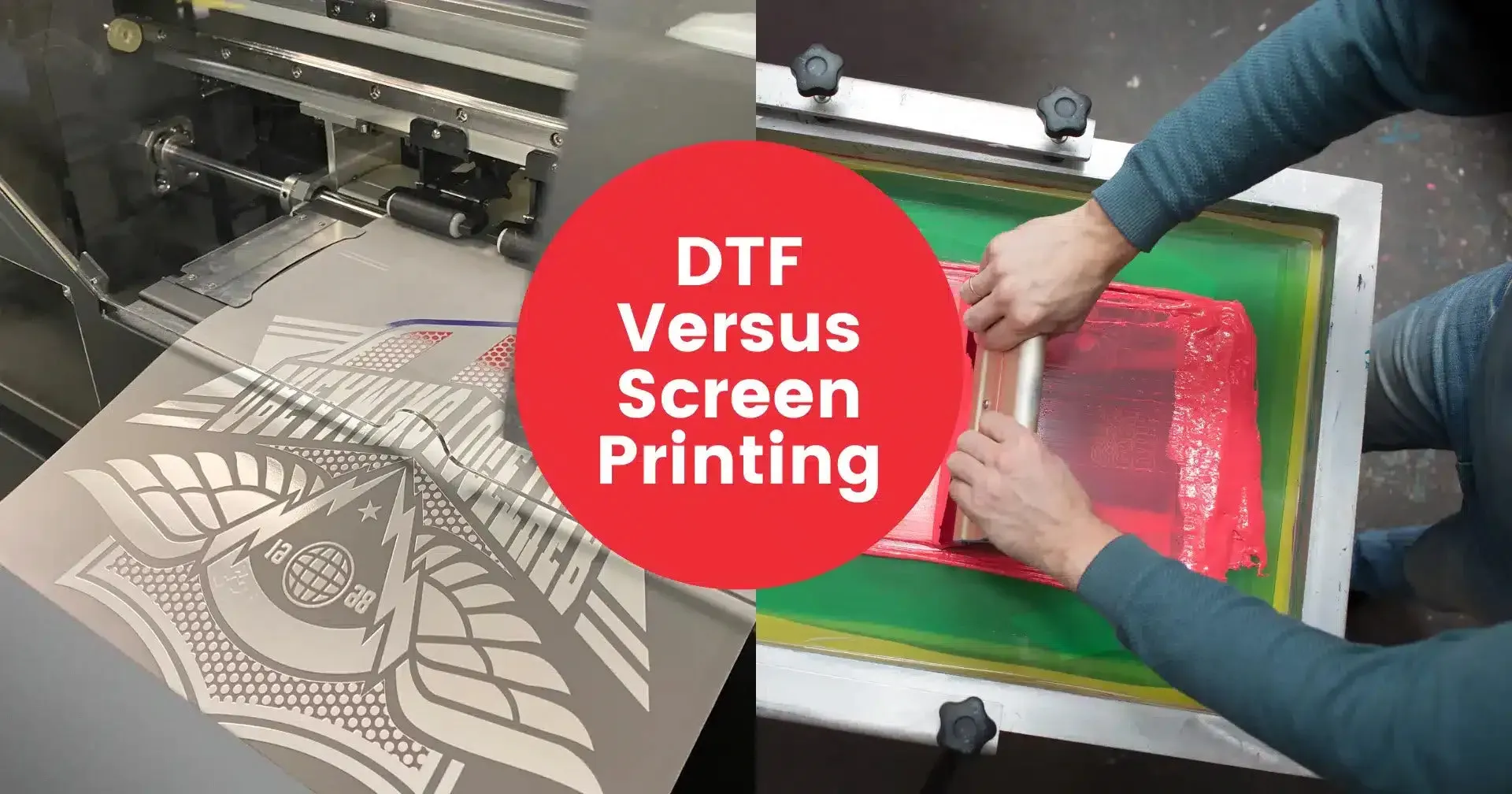
UV DTF transfer vs screen printing presents a modern dilemma for garment decorators seeking crisp detail and durable results. This DTF transfer vs screen printing comparison highlights print quality comparison and the durability and washfastness across fabrics, while also weighing setup costs for UV DTF. Fabric compatibility across cotton, blends, and synthetics is another key factor in predicting performance and value. By weighing these elements, print professionals can balance cost, speed, and finish feel for different project scopes. The article provides a practical framework to compare methods and select the best fit for your materials and timeline.
A modern digital textile transfer option, using UV-curable inks on a carrier film, offers high color fidelity and quick setup, in contrast to traditional screen printing that relies on stencil-based ink deposition. From an on-demand and workflow perspective, the digital route enables variable designs and faster turnarounds, while screen printing shines in large runs with bold color blocks. LSI-friendly terms such as color accuracy, texture, durability, substrate versatility, and production cost help guide decisions without locking you into a single method.
UV DTF transfer vs screen printing: A Comparative Overview of Print Quality and Color Vibrancy
UV DTF transfer is a digital transfer method that uses UV-curable inks printed onto a film, which is then heat-pressed onto fabric. This approach often yields high-resolution images with excellent color saturation, particularly for gradients and photo-like details. When you run a print quality comparison against traditional methods, UV DTF typically delivers crisper edges and richer color density, and white underbases can be integrated for vivid results on dark fabrics.
Screen printing, in comparison, excels in bold, solid color blocks and a traditional hand feel. It reliably delivers punchy saturation and edge clarity on large runs, and the inks—often plastisol or water-based formulations—cure to a durable finish. The choice between UV DTF and screen printing for a given design depends on how much detail you need, the color count, and the fabric you’re decorating.
Durability and Washfastness: Long-Term Performance Across Fabrics
Durability and washfastness for UV DTF depend on proper curing and the adhesive bond to the garment. When UV inks are cured correctly and the film adhesion is solid, the image resists cracking and fading on cotton blends and many poly fabrics. However, washfastness can vary with the chosen film, the garment care, and repeated laundering, so validation on representative fabrics is advisable.
Screen printing is renowned for rugged durability. Plastisol inks, when properly cured, form a robust graphic that holds up well through frequent washing and abrasion, especially on durable workwear and sportswear. That said, performance still depends on ink chemistry, fabric, and curing temperature, and long-term washfastness should be tested for any new application.
Fabric Compatibility and Substrate Range in UV DTF and Screen Printing
UV DTF transfer offers broad fabric compatibility, with good results on cotton, poly blends, and many synthetic fabrics. The film and adhesive system helps achieve vibrant color and white underbase operation, enabling bright results on dark textiles. This flexibility makes UV DTF a strong option when you need a consistent appearance across multiple fabric types.
Screen printing remains highly versatile, but some fabrics—particularly ultra-soft knits or high-polyester blends—may require different inks and pretreatments to prevent cracking or color shift. Testing on fabric swatches and adjusting mesh counts, plastisol formulations, and heat-curing parameters are common steps to ensure reliable results across substrates.
Cost and Setup Considerations: Setup Costs for UV DTF versus Screen Printing
Setup costs for UV DTF can be favorable for small runs because you avoid creating screens for every color. The digital workflow, generic film, and on-demand color adjustments reduce upfront tooling, enabling quicker ramp-ups and lower initial investment for those designs with many colors. However, material costs for transfer films and adhesives can influence per-unit pricing, so accounting for setup costs for UV DTF is essential in budgeting.
Screen printing requires investment in screens, emulsions, and printing equipment, which increases upfront costs but pays off in unit cost reductions as volumes rise. Screen production benefits from repeatable processes for large orders, reliable color matching, and low per-item costs, provided you have stable volume and a limited color count. Evaluating setup costs for UV DTF versus screen printing helps decide the most economical route for your forecast.
DTF transfer vs screen printing: Throughput, Color Management, and Practical Tradeoffs
DTF transfer vs screen printing: Throughput, color management, and practical tradeoffs hinge on run size and design complexity. UV DTF’s digital workflow can shorten setup times for multi-color artworks and enable quick changes between jobs, with curing time adding a predictable delay. Screen printing shines in high-volume runs where per-color costs decrease with scale, but retooling times between jobs can add to total turnaround for complex designs.
For projects with variable data or on-demand customization, DTF transfers provide speed and flexibility, while screen printing offers stability for consistent color blocks across many units. The practical takeaway is to align your production plan with the expected order size and color count: use UV DTF for detailed or on-demand items and reserve screen printing for bulk runs with simple, high-coverage designs.
Hybrid Approaches and Workflow Best Practices for Mixed Runs
Hybrid approaches can deliver the best of both worlds. A common strategy is to reserve UV DTF for complex artwork, gradients, and small runs, while using screen printing for solid-color sections, high-volume garments, or repeat orders. This approach leverages the strengths of each method to balance print quality, durability, and cost.
Practical tips include testing on representative fabrics, validating curing parameters, and building care instructions for customers. Start with sample swatches, compare against a control, and track wash cycles to ensure washfastness and color stability. A data-driven approach helps you choose the right method or combination for each product line.
Frequently Asked Questions
What is UV DTF transfer vs screen printing and how does the print quality comparison look between the two?
UV DTF transfer uses UV-curable inks printed on a transfer film, then bonded to fabric. It offers high-resolution detail and strong color reproduction, including gradients, which makes it excellent for photos and complex designs. Screen printing excels at bold solid colors and high-coverage areas with a traditional look; for simple artwork on light fabrics, it can be very economical and durable. In terms of print quality comparison, choose UV DTF for detail-rich work and screen printing for solid-color blocks.
How do UV DTF transfer vs screen printing differ in durability and washfastness across common fabrics?
Durability and washfastness depend on curing, adhesives, and ink systems. Screen printing with plastisol inks is renowned for long-lasting wear, especially on heavy use items, when properly cured. UV DTF can match or approach that durability on many fabrics when the ink cure and adhesion are optimized, but testing on the target fabric is advised to confirm washfastness.
What are the setup costs for UV DTF for small runs, and how do they compare to screen printing?
Setup costs for UV DTF for small runs are typically lower because you don’t need multiple screens; you rely on a digital file and transfer film. However, material costs for films, adhesives, and UV inks can be higher per unit. Screen printing requires screens and emulsions and can have higher upfront setup times, but per-unit costs drop as volume increases, making it often more economical for large runs.
Which method offers better fabric compatibility: UV DTF transfer vs screen printing?
UV DTF transfer generally offers broad fabric compatibility, including cotton, blends, and certain synthetics, with a white underbase helping vivid colors on dark fabrics. Screen printing is also versatile but may require different inks and pretreatments for very stretchy or high-polyester fabrics. In practice, test both methods on representative fabrics to determine the best option.
When printing photos or gradients, how does the print quality comparison between UV DTF transfer vs screen printing stack up?
UV DTF transfer shines with photo realism and smooth gradients thanks to digital inkjet-like rendering and fine detail. Screen printing handles complex color blends less naturally and may require more colors or halftoning, but it delivers strong color blocks and texture. For photo-heavy designs, UV DTF often offers superior print quality; for simple gradient blocks, screen printing can be efficient.
What guidelines help decide between UV DTF transfer vs screen printing based on fabric compatibility, durability, and costs?
Use a practical framework: evaluate fabric compatibility with each method through swatch testing; compare durability and washfastness under real-world care; and estimate total costs, including setup, per-unit ink/film costs, and lead times. For small, detailed runs, UV DTF offers flexibility and faster setup; for large-volume, simple-color designs, screen printing usually delivers lower unit costs and proven durability.
| Aspect | UV DTF transfer | Screen printing | Practical takeaway |
|---|---|---|---|
| Overview | UV DTF transfer is a digital transfer method using UV-curable inks printed on a transfer film and bonded to fabric with heat and pressure; it enables fast curing, high color density, and compatibility with a wide range of fabrics including dark textiles with white underbase. | Screen printing is a traditional method that pushes pigment through a mesh stencil onto garments; colors are applied in sequence with curing between layers, delivering bold solid colors and repeatable results for large runs. | Use UV DTF for detailed or photo like designs and small runs; screen printing is cost efficient for large volumes of simple color designs. |
| Print Quality & Color Vibrancy | High resolution, strong color saturation, and ability to reproduce gradients with white underbase on dark fabrics. | Excellent solid color coverage and bold saturation; ideal for high-coverage designs on light fabrics; multi color designs are best when colors are limited. | For complex images and color blends, UV DTF often has the edge; for simple bold colors, screen printing is typically more efficient. |
| Hand Feel, Opacity & Comfort | Ink sits on top of the fabric; can feel slightly firmer; softness improves with formulation and adhesive choice. | Ink sits into the fabric surface; yields a smooth, flexible hand after proper curing. | Screen printing generally offers a more natural hand; UV DTF can be optimized for softness but may still be perceptible to the touch on some fabrics. |
| Durability & Washfastness | Durable when properly cured; resistance to cracking and fading on cotton blends depends on film quality and adhesive. | Very durable when cured using plastisol or high quality inks; tends to outlast digital transfers on heavy use items. | For frequent washing, screen printing often offers stronger long term durability; UV DTF can approach durability with good workflows and testing. |
| Fabric Compatibility | Broad compatibility across cotton, blends, poly and some synthetics; white underbase helps vibrant results on dark fabrics. | Very versatile; may require different inks or processes for very stretchy or high polyester fabrics. | If working with varied fabrics, test both methods on swatches; UV DTF offers flexibility across fabrics. |
| Production Speed & Setup Costs | Digital workflow with minimal tooling; no screens; quick setup for complex multi color designs; ensure curing time is factored in. | Screens must be created for each color; color matching and multiple passes add lead time; cost effective at high volumes once set up. | For short runs or color-rich designs, UV DTF can save time; for large orders with few colors, screen printing scales economically. |
| Costs & Maintenance | Material costs include transfer film, adhesives and UV inks; labor can be lower for micro runs; printer and curing station maintenance required. | Capital costs run with screens, inks, emulsions, and curing equipment; unit costs drop with volume; routine maintenance of inks and screens. | UV DTF favors on demand and flexible runs; screen printing favors high volumes with predictable per unit costs. |
| Environmental & Longevity Considerations | UV-curable inks tend to have lower VOCs; films and adhesives require proper waste handling. | Plastisol inks carry environmental considerations; proper disposal and recycling of screens is common practice. | Choose inks and processes that align with sustainability goals; both can be sustainable with good practices. |
| Use Case Scenarios & Best-Fit Guidelines | Small batch, high detail designs shine with UV DTF for photorealistic imagery or rapid turnaround. | Large volume, simple color designs favor screen printing for durability and cost efficiency. | Unusual fabrics or dark colors benefit from UV DTF with white underbase; customization and on demand are well suited to UV DTF. |
| Practical Tips | Test on representative fabrics before full runs; verify curing parameters and adhesive compatibility. | Invest in quality screens, emulsions, and proper curing temperatures for durable screen prints; test for cracking and fading. | Consider post processing care instructions; a hybrid approach can combine details with solid color areas for best results. |
Summary
UV DTF transfer vs screen printing is a comparison of two established garment decoration methods. Each method has distinct strengths in print quality, durability, fabric compatibility, and production economics. UV DTF offers rapid setup, high detail and versatility across fabrics, making it well suited for on demand, high-detail designs and small runs. Screen printing remains a workhorse for large volume orders with simple color needs, delivering strong durability and cost efficiency at scale. By evaluating print quality, color vibrancy, hand feel, fabric compatibility, production speed, and environmental considerations, you can choose the best method for your designs and production model. In many shops a hybrid approach — using UV DTF for complex artwork and screen printing for solid color areas — delivers optimal balance of quality, speed, and cost.