
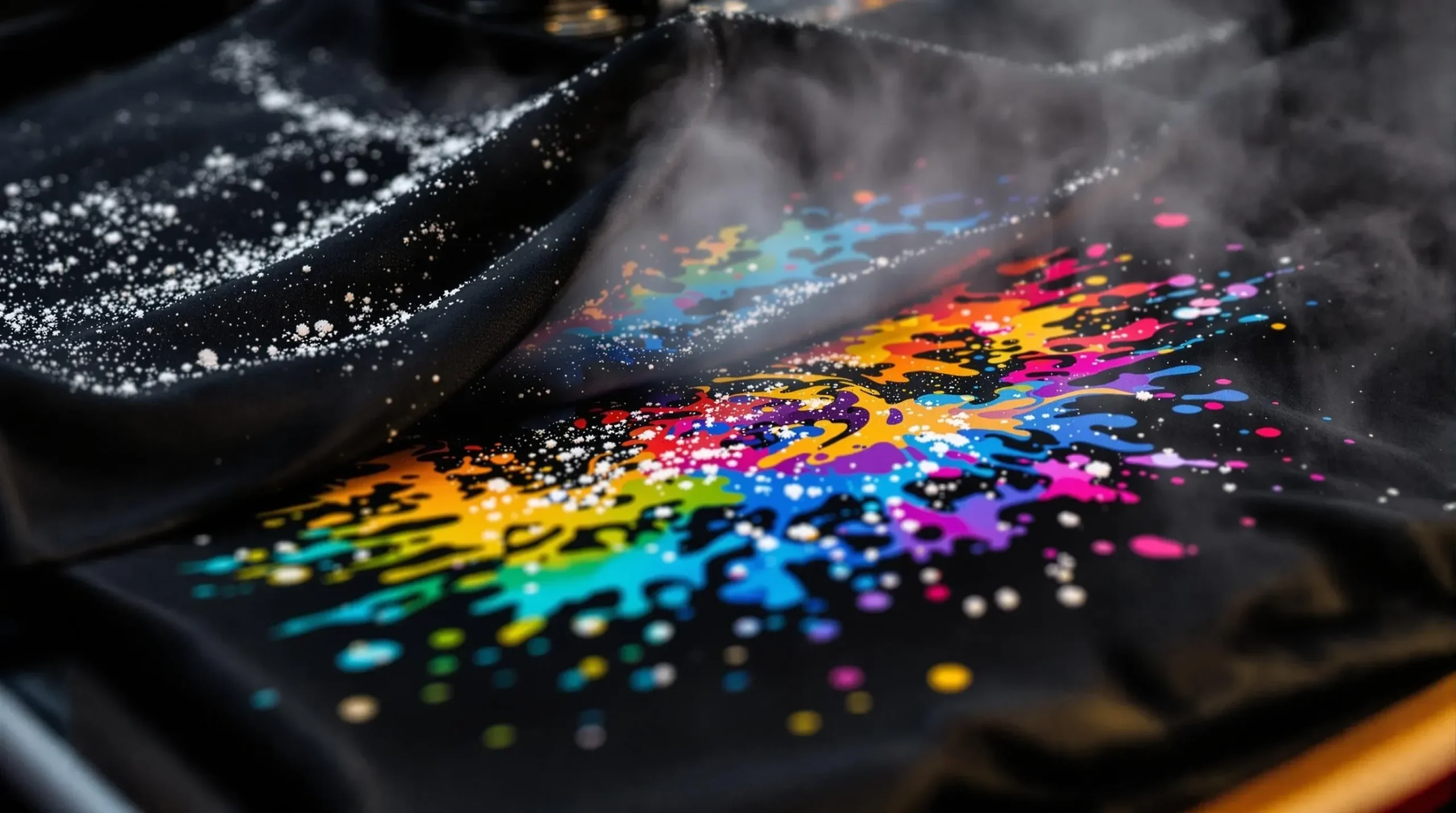
UV DTF Transfer on Dark Garments opens up bold color possibilities for black and other deep-hued fabrics. To achieve vibrant results, understanding color strategies for UV DTF on dark fabrics is essential. A solid white underbase for UV DTF on dark shirts provides opacity and helps colors stay true, even on crowded designs. You’ll also want to know troubleshooting UV DTF on dark garments so misfits like dulls, misregistration, or ghosting can be addressed quickly. Following best practices for UV DTF on black garments ensures consistent results across runs and materials.
In other words, the process involves UV-curable Direct-to-Film applications on dark fabrics to achieve opaque, vibrant images. Think of an opaque base layer (a white foundation) as the primer that lets bright colors read clearly on black or navy textiles. Practitioners often describe the workflow as top-coat color passes built upon a supportive underbase, with careful curing and calibration. By framing the topic in terms of substrate-ready techniques, color accuracy, and transfer reliability, you can apply proven best practices across various dark garment types.
UV DTF Transfer on Dark Garments: Opacity, Underbase, and Color Integrity
Printing on dark fabrics requires opacity, careful color management, and a workflow tailored to UV DTF. When the goal is vivid, durable graphics on black or other dark garments, the foundation is critical for true-to-design colors and edge fidelity.
A disciplined approach to layering, underbase application, and curing helps prevent dull hues and visible fabric show-through. By establishing a repeatable process from pre-press to final cure, you can maintain color integrity across batches while preserving the fabric’s hand feel.
Color Strategies for UV DTF on Dark Fabrics
Exploring color strategies for UV DTF on dark fabrics means selecting palettes with appropriate luminance and using printer profiles to align digital targets with real-world output. A strong strategy accounts for opacity requirements, saturation limits, and how different colors behave atop white underlayers.
Additionally, color strategy involves practical decisions about layering depth, edge handling, and contrast. By planning color passes in a logical sequence and validating with swatches on target fabric, you boost vibrancy without sacrificing registration or softness.
White Underbase for UV DTF on Dark Shirts
A robust white underbase for UV DTF on dark shirts serves as the canvas that drives opacity and color pop. A solid, even foundation prevents the garment color from bleeding through and helps the bright hues read accurately.
Controlling underbase thickness is essential: too much can stiffen the print, while too little can leave gaps or pale areas. Some operators use multi-pass white layers for improved softness while keeping opacity high.
Troubleshooting UV DTF on Dark Garments
Troubleshooting UV DTF on dark garments often centers on color brightness, registration, and edge fidelity. Dull colors or washed-out tones typically point to underbase or curing inconsistencies that need adjustment.
Common fixes include verifying color-management profiles, ensuring consistent film thickness, rechecking alignment marks, and refining curing times. By systematically testing swatches on the actual fabric color, you can isolate issues and implement reliable solutions.
Best Practices for UV DTF on Black Garments
Following best practices for UV DTF on black garments helps maintain color accuracy, durability, and fabric feel. Start with an underbase-first workflow, careful curing, and stable environmental conditions to reduce ink migration and edge halos.
A repeatable workflow—coupled with ongoing calibration, fabric-specific profiling, and regular swatch testing—supports consistent results across orders. This proactive approach also minimizes reprints and improves overall efficiency.
From Design to Deliverable: A Practical UV DTF Workflow
From design to deliverable, a practical UV DTF workflow includes pre-production prep, printing sequence, curing, and quality control. Map artwork to underbase, color, and detail passes to ensure proper alignment and opacity on dark fabrics.
Post-print processing and packaging finalize the product with care instructions that preserve color vibrancy. Regular QA checks and documentation help maintain repeatability, enabling scalable production of vibrant UV DTF prints on dark garments.
Frequently Asked Questions
What is UV DTF Transfer on Dark Garments and why is white underbase for UV DTF on dark shirts critical?
UV DTF Transfer on Dark Garments refers to printing with UV-curable inks onto a transfer film and applying it to dark fabrics. The white underbase for UV DTF on dark shirts is critical because it creates opacity, helps colors pop, and improves consistency across batches. Plan for a white underbase first, then color layers, with appropriate curing to maintain softness and durability.
What are color strategies for UV DTF on dark fabrics to achieve vibrant results?
Color strategies for UV DTF on dark fabrics involve using a solid white underbase, selecting colors with suitable opacity, and employing a structured color-management workflow. Profile your printer and inks for UV DTF on dark substrates, and consider layering colors to add depth without over-saturating the fabric. Always test swatches on the actual garment color before production.
What are best practices for UV DTF on black garments to maximize opacity and durability?
Best practices for UV DTF on black garments include a solid white underbase, consistent curing, and careful ink selection. Use high-opacity white ink underbase to ensure visibility of colors, verify alignment, and keep environmental conditions stable during printing and curing. Implement a repeatable workflow with underbase-first passes and color passes, plus post-cure for durability.
How can I troubleshoot UV DTF on dark garments when colors look dull or misregistered?
Troubleshooting UV DTF on dark garments starts with checking underbase coverage and cure, then verifying color profiles and printer calibration. Inspect registration marks and transfer-film alignment, and reduce color-count or adjust layering to improve registration. If colors remain dull, test higher opacity underbase or adjust curing time to improve brightness.
How does white underbase for UV DTF on dark shirts influence opacity and hand feel?
White underbase thickness determines opacity and fabric hand feel in UV DTF on dark shirts. Too thick underbase can stiffen the print; too thin may allow fabric color to show through. Aim for a solid, even white layer, and consider two thinner passes to balance opacity and softness.
What is the recommended workflow from design to final print for UV DTF Transfer on Dark Garments?
From design to final print, map artwork to underbase, color, and detail passes; convert to the UV DTF gamut and profile for dark fabrics; print the white underbase first, cure, then print color passes in order; perform a final cure and conduct quality checks before packaging.
| Aspect | Key Points |
|---|---|
| White Underbase | Foundation for opacity and color pop on dark garments. Apply a solid, even white layer to create a reliable canvas; manage underbase thickness to balance opacity with softness/hand feel. |
| Color & Ink Management | Profile the printer for UV DTF inks on dark substrates. Choose colors with mindful opacity, consider layering for depth, and follow a color-management workflow (digital targets, Pantone if available). |
| Design Considerations | Simplify color counts, test opacity on the actual fabric, and use white accents to create contrast and highlight elements on dark backgrounds. |
| Ink & Film Quality | Use UV-curable inks compatible with the transfer film; ensure film quality is consistent to reduce mottling and edge halos. |
| Printing Order & Drying | Print the white underbase first, cure as allowed, then print color layers. Maintain stable environmental conditions to preserve color accuracy and edge sharpness. |
| Practical Tricks to Boost Color | Layer color passes for depth, use edge enhancement/anti-aliasing, and regularly calibrate. Consider thinner underbase passes to improve hand feel while preserving opacity. |
| Workflow (Design to Print) | Pre-production: map artwork to underbase/color/detail passes; convert colors to the UV DTF gamut. Printing: underbase first, then color passes; post-process with a light cure. Quality control and packaging finalize the workflow. |
| Troubleshooting | Dull colors: adjust underbase or curing; misregistration: check alignment; fabric show-through: increase underbase; edge halos: tighten edge precision; cracking/feel: avoid over-inking and optimize cure. |
| Care & Longevity | Wash inside out in cold/warm water with mild detergents, dry on low heat or line dry, and iron with barrier to protect transfer surface. |
| Best Practices | Design for contrast on dark fabrics, establish a repeatable underbase-first workflow, apply color-management, test on the actual fabric, and keep equipment/inks well-maintained for consistency. |
Summary
Conclusion: UV DTF Transfer on Dark Garments is a nuanced process where achieving opacity and vivid color hinges on a well-planned workflow. By prioritizing a solid white underbase, mindful color management, and disciplined testing, you can produce bold designs on black and other dark fabrics. A robust approach to ink quality, film suitability, printing order, and curing, combined with careful design decisions and proactive troubleshooting, leads to durable, vibrant results. Regular calibration, testing on actual fabric swatches, and a repeatable workflow help ensure color reliability across orders, enabling you to master UV DTF on dark garments and expand your printing capabilities.