
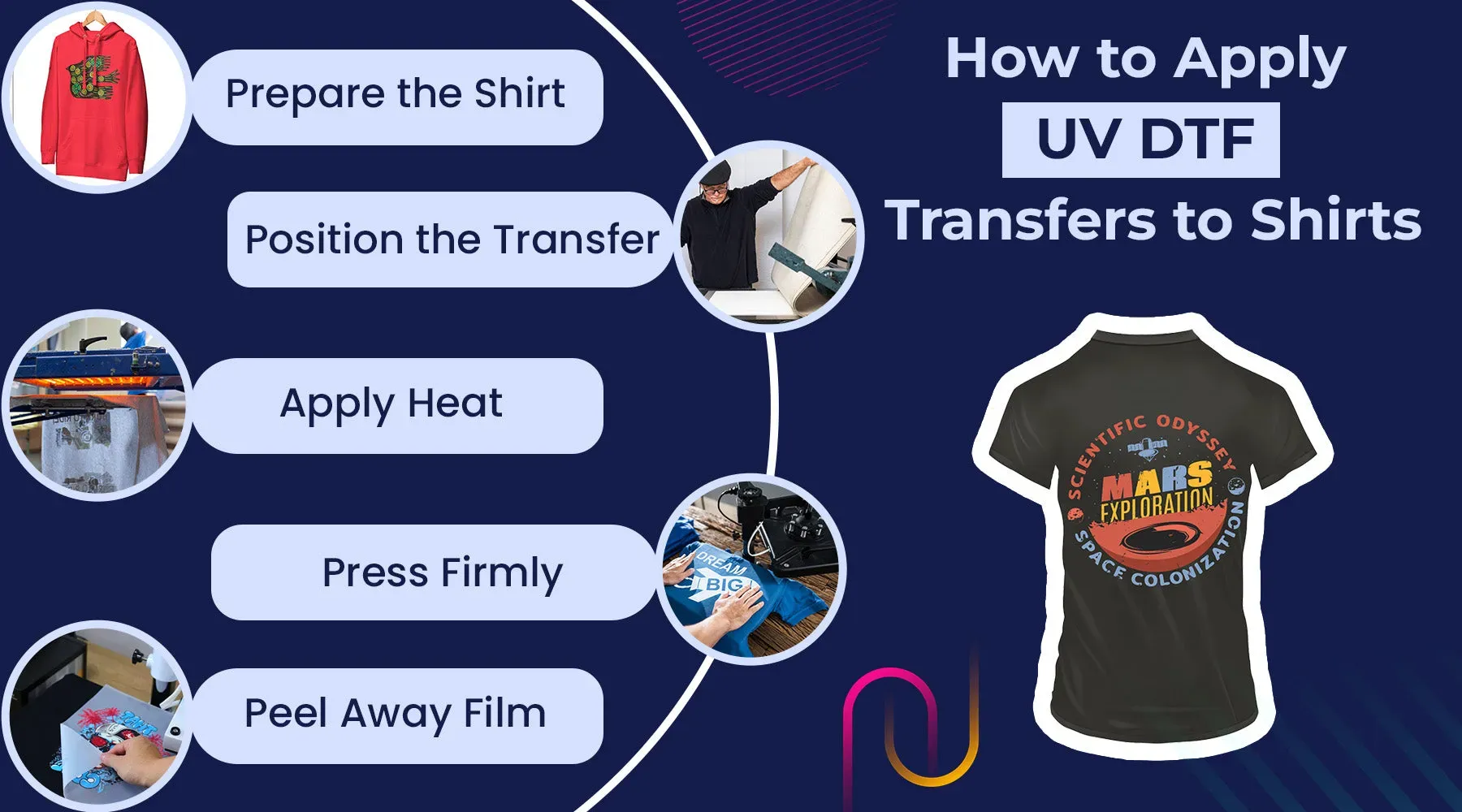
UV DTF Transfer on T-Shirts has emerged as a popular method for vibrant, durable apparel designs. If you’re exploring an efficient way to print intricate graphics on fabric, UV DTF transfers offer sharp imagery, a softer hand feel, and compatibility with a wide range of fabrics. This step-by-step guide covers preparation, heat-press settings, alignment tips, and care instructions to help you apply the transfer successfully. By following these guidelines, you’ll produce professional results that hold up wash after wash while preserving design detail. This guide also weaves in keywords like UV DTF transfer process, DTF transfer on fabric, t-shirt heat pressing tips, and how to apply DTF transfer on apparel to help you optimize your search presence while you learn.
In other terms, this approach relies on a UV-curable film carrying the design, which is then bonded to fabric with controlled heat. Techniques described as UV-printed direct-to-film transfers or film-based apparel decoration emphasize high resolution, gradients, and the versatility across cotton, blends, and dark fabrics. This framing also touches on the transfer process, the role of heat pressing, and garment preparation. By using alternative terminology such as UV-printed film transfer, fabric-ready graphics, and heat-application methods, the discussion remains accessible to searchers with different phrasing.
UV DTF Transfer on T-Shirts: What It Is and Why It Shines
UV DTF Transfer on T-Shirts delivers high-resolution prints with smooth gradients and a soft hand feel. Grasping the UV DTF transfer process helps you anticipate color saturation, edge crispness, and how the ink adheres to different fabrics.
Because this method supports a wide fabric range—from cotton to blends—the design can stay vibrant through repeated wash cycles. Understanding the process informs your decisions on image resolution, ink choices, and curing time, all essential for professional results.
DTF Transfer on Fabric: Materials, Tools, and Setup for Best Results
DTF transfer on fabric requires careful selection of film, inks, and heat equipment. Start with a reliable UV DTF transfer film, a heat press with stable temperature control, and release sheets to prevent glazing.
A clean, wrinkle-free garment and proper alignment reduce misprints. This workflow supports a broader process, including aligning with guides, performing a pre-press, and choosing fabrics from cotton to poly blends to suit the design.
How to Apply UV DTF Transfer on Apparel: Step-by-Step Guide
This practical guide explains how to apply DTF transfer on apparel, including the UV method and essential layout checks. Begin with garment prep, accurate alignment, and a brief pre-press to remove moisture.
The steps cover pre-press, temperature and time settings, post-press curing, and careful removal of the carrier sheet. Following these steps helps ensure consistent results across small runs or custom tees.
T-Shirt Heat Pressing Tips: Temperature, Pressure, and Timing for Durable Prints
T-shirt heat pressing tips focus on achieving even platen contact, avoiding scorching, and preserving print detail. For UV DTF transfers, set the press around 180–190°C (356–374°F) with medium to firm pressure and a short dwell time.
Use a teflon sheet to prevent surface glaze, perform a proper pre-press to remove moisture, and consider a warm peel to improve edge definition. Regularly calibrate pressure and temperature to maintain reproducible results.
Optimizing Color and Detail: Alignment, Underprints, and Layering Techniques
To maximize color saturation and gradient fidelity, ensure the design file is high resolution and color-managed. A white underprint or light base is commonly used on dark fabrics to improve opacity and brightness.
Layering separate elements—such as white underprints followed by colored layers—requires cooling between passes to prevent ghosting. This approach aligns with the UV DTF transfer process and helps preserve crisp edges and smooth texture.
Care, Maintenance, and Longevity of UV DTF Designs on Clothing
Post-transfer care extends the life of your UV DTF designs. Turn shirts inside out before washing, use cold or warm cycles, and avoid aggressive scrubbing to protect the print.
Storage and handling also matter; keep transfer films in a cool, dry place and ensure garments are fully cooled after pressing before folding or packing. Long-term durability depends on proper curing and following manufacturer guidelines for DTF transfer on fabric.
Frequently Asked Questions
What is the UV DTF Transfer on T-Shirts process and how does it work?
The UV DTF Transfer on T-Shirts process uses UV-curable inks printed onto a clear transfer film, then bonded to fabric with a heat press. In the UV DTF transfer process for T-Shirts, designs stay sharp with smooth gradients and work on many fabrics, including dark garments. It’s a suitable option for small runs and custom apparel.
Which fabrics are best for UV DTF Transfer on T-Shirts and how does it relate to DTF transfer on fabric?
Most cotton and cotton blends work well with UV DTF Transfer on T-Shirts, and the method is compatible with many fabrics. For some synthetics or dark fabrics, you may need adjusted heat and time or a white underprint to improve opacity, which is a common consideration in DTF transfer on fabric.
What are t-shirt heat pressing tips for applying UV DTF Transfer on T-Shirts?
Pre-press to remove moisture, then align the transfer and secure with low-tack tape. Set the heat press to about 180–190°C (356–374°F) and press for 12–15 seconds with medium to firm pressure. Use a teflon or silicone release sheet and follow the t-shirt heat pressing tips to avoid shifting.
How do you apply a DTF transfer on apparel using the UV DTF Transfer on T-Shirts method?
Prepare the garment with a pre-press, place the transfer centered, then cover with a release sheet. Press at 180–190°C for 12–15 seconds with even pressure, then peel warm or hot according to the film guidelines. Allow it to cool before handling.
What are common issues when applying UV DTF Transfer on T-Shirts and how can you troubleshoot them?
Common issues include ghosting or misalignment, cracking edges, wrinkling, or fading on dark fabrics. Troubleshoot by re-checking alignment, ensuring proper pre-press, using the correct temperature and dwell time, applying sufficient pressure, and using a backing or white underprint when needed.
How should you care for and finish UV DTF Transfer on T-Shirts to maximize durability?
Follow care guidelines: turn shirts inside out, wash cold or warm on a gentle cycle, avoid hot cycles, and air dry or tumble dry on low. Iron on the reverse side or with a barrier, and consider a post-press cure if the film requires it to maximize the durability of UV DTF Transfer on T-Shirts.
| Aspect | Key Points |
|---|---|
| What is UV DTF Transfer on T-Shirts? | • Print on clear film with UV-curable inks and transfer via heat press. • Enables high-resolution designs with gradients and photo-realistic detail. • Compatible with many fabrics (cotton blends, dark garments); suitable for small runs and custom orders. • Delivers durable, vibrant results. |
| Materials and Tools | • UV DTF transfer film with printed design • Heat press with stable temperature control • Teflon or silicone release sheet • Hot-melt adhesive or carrier sheet (if needed) • Heat-resistant tape or low-tack tape for alignment • Pre-washed, wrinkle-free garment • Protective gloves and clean workspace • Thermometer or timer • Grippy cutting/mat for stability |
| Preparing the Garment and Design | • Pre-wash and fully dry the garment • Remove wrinkles and lint • Place inside a silicone mat to prevent ink transfer • For dark fabrics, use a light backing or white underprint if needed • Verify mirroring/orientation; face-up design orientation; fix with low-tack tape to prevent shifting |
| Step-by-Step Application Process | 1) Pre-press and alignment: pre-heat 2–3 seconds; center on shirt; use low-tack tape. 2) Temperature/time: 180–190°C (356–374°F); 12–15 seconds; adjust pressure; use timer; follow film’s warm/cold peel guidance. 3) The actual transfer: place Teflon/silicone sheet over transfer; apply even pressure; avoid shifting; remove with gloves after pressing. 4) Post-press care: rest a few minutes; optional re-press with clean sheet; cool completely. 5) Finishing touches: remove carrier sheets/tapes after cooling; inspect edges and re-press if needed. |
| Quality considerations | • Color saturation and detail are typically superior to vinyl. • Check fabric compatibility; some synthetics may require adjusted heat/time. • Layer management: press multi-layer designs separately with cooling between passes. |
| Troubleshooting Common Issues | • Ghosting/misalignment: re-check alignment and tape placement. • Cracking/peeling edges: ensure full bonding with proper cooling, temperature, and pressure; adjust as needed. • Wrinkling after transfer: moisture issues; pre-press longer or use drier garment. • Fading on dark fabrics: use proper underprint/white base; verify film compatibility. |
| Care Instructions for Longevity | • Turn shirts inside out before washing. • Use cold or warm gentle cycles. • Avoid aggressive scrubbing. • Tumble dry low or air dry. • Iron on the reverse side or with a barrier. |
| Tips for Better Results and Durability | • Use high-resolution designs and reliable UV inks for sharp details. • Regularly calibrate the heat press and ensure even pressure. • Run test on similar garments before large batches. • Keep pressing surfaces and release sheets clean. • Store transfer films in a cool, dry place away from direct sunlight. |
| Common Mistakes to Avoid | • Inadequate pre-pressing leading to moisture issues. • Incorrect temperature or time for the film. • Misalignment or shifting during pressing. • Skipping the cooling period after peeling. • Crowded workspace or non-flat surface causing uneven heat transfer. |
Summary
UV DTF Transfer on T-Shirts delivers high-detail prints with a soft hand on a wide range of fabrics. This process, from preparation to finishing, supports durable, vibrant results suitable for small runs and custom apparel. Following the step-by-step guidance ensures alignment, color richness, and long-lasting adhesion, while care instructions help maintain print quality wash after wash.